A render is not
a design.
Aether Design AI is an AI interior-design system that takes a written brief or a photo of your own room, and returns a photorealistic render together with the buildable specification behind it — dimensions, materials, lighting — then scores its own work against published design standards and renders again until it passes. 576 styles across 36 families. Not just a pretty picture: a design with proof.
In beta. The product works and every design you make is yours to keep. Expert validation with practising designers is under way.

Aether Design AI
Design Intelligence for Interior Design
Google, or an email and password, secured by Clerk.
measured design-correctness gain over best-of-N sampling
visual-accuracy bar every render must pass
self-correction attempts: the AI fixes its own faults
design dimensions checked, from ergonomics to brand
How it works
Your brief goes through a design review, before you ever see it.
Aether Design AI is an AI interior design tool that turns a written brief — or a photograph of a room you already have — into a photorealistic render and a measured design specification. Choose from 576 styles across 36 families, or upload your own room and keep its walls, windows and viewpoint while everything else changes. It drafts the spec, renders, scores the result against your brief, and re-renders until it measures up. A verified design usually takes one to three minutes, depending on how many renders it needs to pass.
Describe the space
A sentence is enough: “a moody mid-century living room with a stone fireplace.” Pick a style; premium quality if you want the stronger design brain.
The spec is drafted
Claude writes a buildable specification grounded in real standards: dimensions with their source (Neufert, ADA), materials, lighting plan, and your brand rules as law.
The room is rendered
Seven image models, chosen per design — a photoreal living room and a graphic concept board are not best served by the same one. The specification drives whichever you pick.
Judged & self-corrected
A second AI scores the render against the spec. Below 82? It rewrites the prompt to fix the exact faults and re-renders, up to 3 attempts, best one wins.
Which model should you use? — what each of the seven is good at, and what it costs.
Two different AIs. The one that paints never grades its own homework; a separate one judges.
Gallery
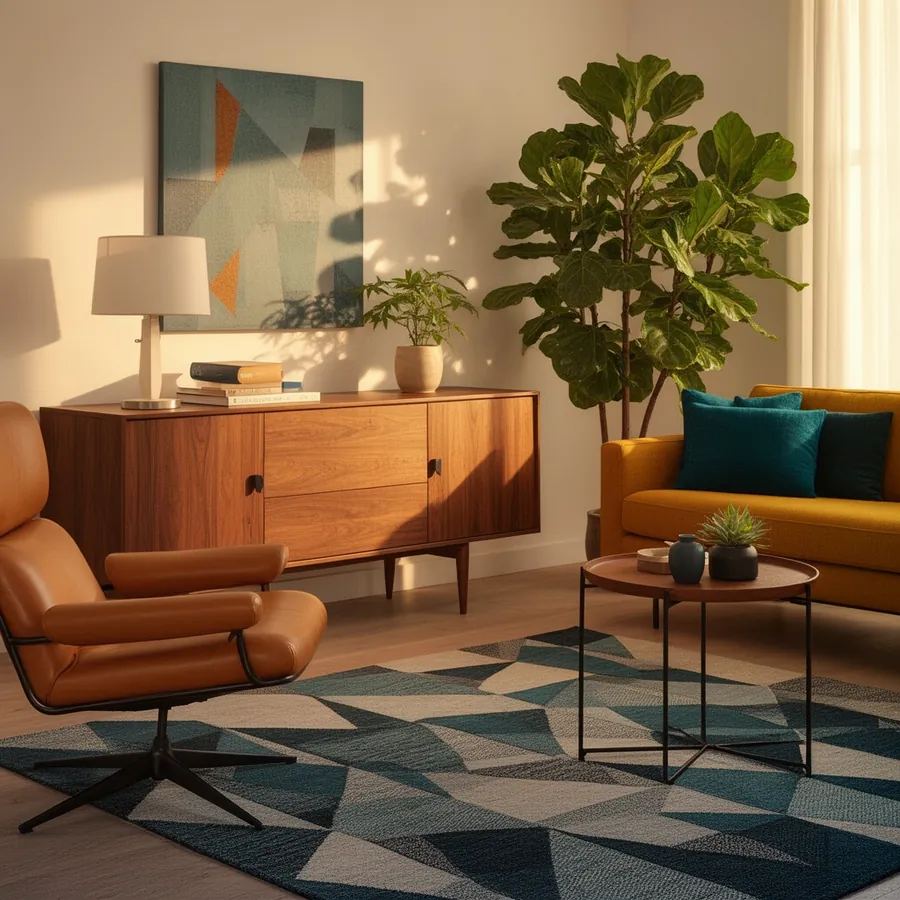
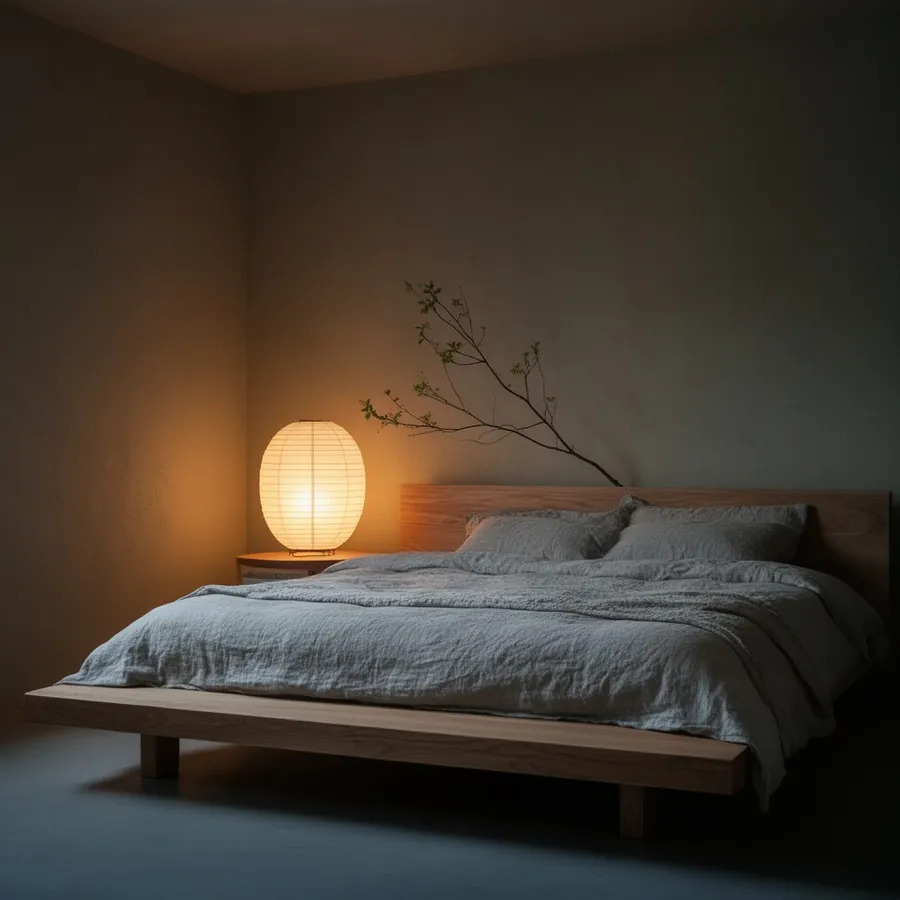
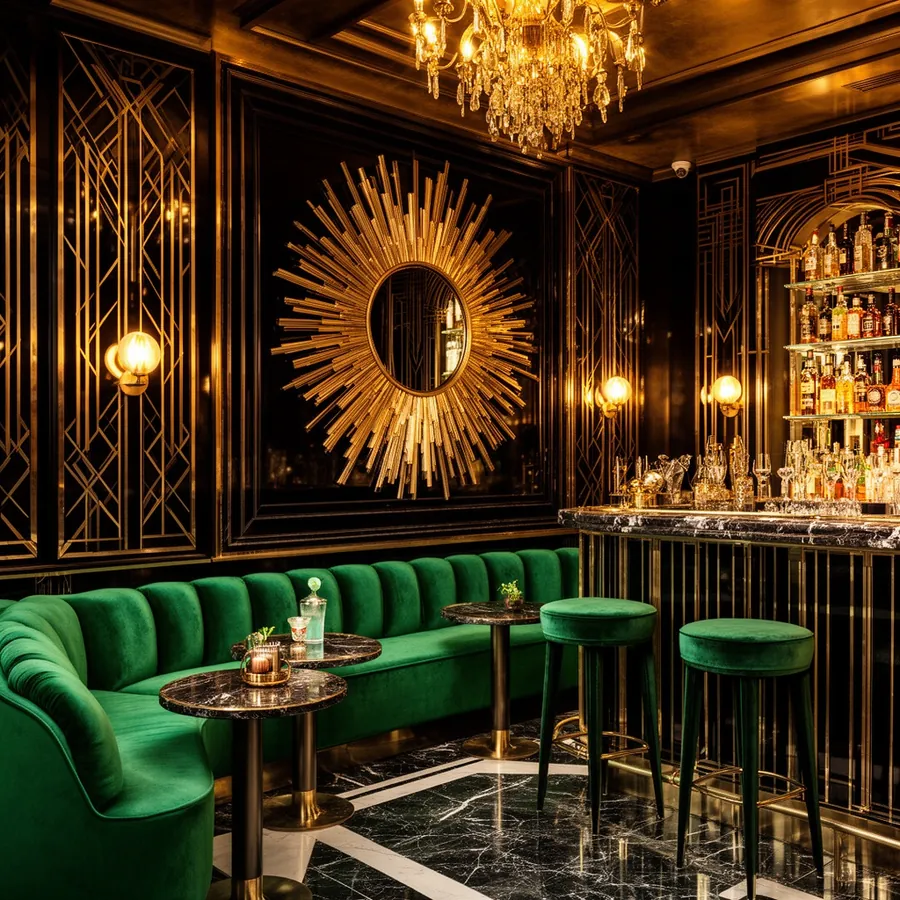
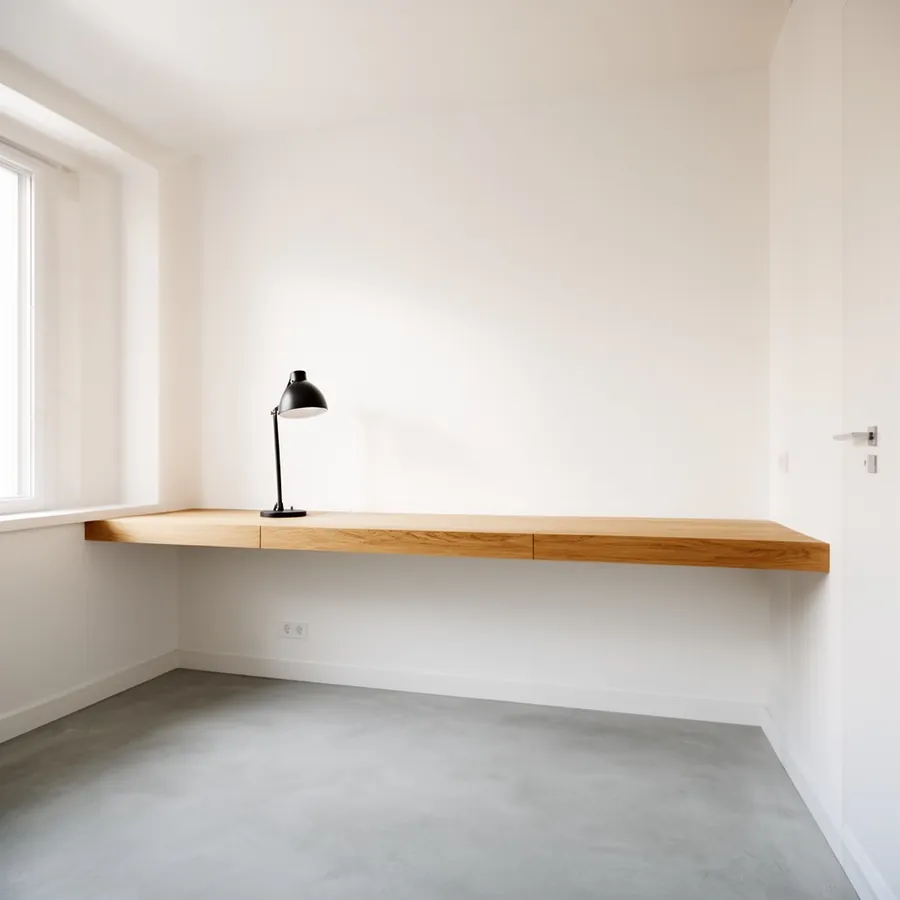
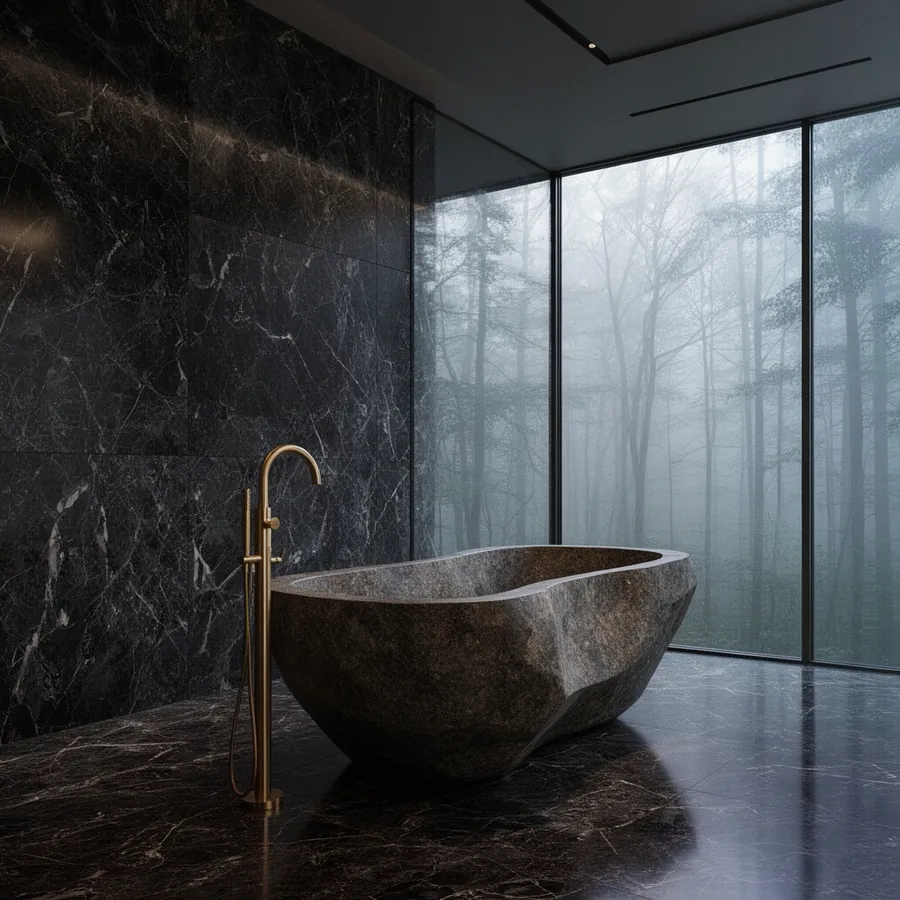
Real renders. Real specs behind each one.
What you get
Everything a picture can’t give you.
The difference from a normal AI image generator is that the picture is not the deliverable. Midjourney, DALL·E and Stable Diffusion return an image and stop; Aether Design AI returns the image plus the reasoning behind it: dimensions, materials, a lighting plan, and pass/warning/fail checks against published spatial standards. A separate AI model, which never sees the image being made, scores every render against the brief and sends it back to be fixed if it falls short.
A buildable spec, not just pixels
Dimensions anchored to published standards, a materials schedule, a lighting plan, and an honest pass/warning/fail critique across seven design categories, with an overall compliance score.
Brand-lock
Your brand book is law. Rules like “no polished metal” constrain both the image and the critique: a violation caps the score. Compliance becomes auditable.
The self-correction loop
Render → judge → fix the exact faults → re-render. In our controlled study, blind resampling barely helped (+1.2); intelligent correction added +20.6.
Watch it think, keep every attempt
The correction journey streams live: each attempt appears with its accuracy as it’s judged, and every render is kept for side-by-side comparison, not just the winner.
Pricing
Buy tokens once, or subscribe for the tools.
A design costs tokens — 10 per image, and a design renders up to three times until it passes the quality bar. So a design lands between roughly ₹10 and ₹45 depending on the pack and how many attempts it takes. New accounts start with free tokens, and tokens you buy never expire.
Token packs
Pay once. Nothing recurring, nothing to cancel.Basic
100 tokens · ~10 designs
Unlocks 5 enhancements
Enough to design a room properly and see whether the verification is worth it.
Pro
350 tokens · ~35 designs
Unlocks 25 enhancements
A room a week for most of a year, or every room in a flat with revisions.
Max
750 tokens · ~75 designs
Unlocks 75 enhancements
A whole house, or one client project explored properly rather than once.
Ultra
1,600 tokens · ~160 designs
Unlocks 150 enhancements
Studio volume bought outright, with no monthly commitment.
Every pack includes the full self-correction loop, Standard Verification, and a buildable specification with every render.
Monthly plans
Cheaper tokens, handed out daily, plus the tools a pack cannot give you.A plan is the cheaper way to hold the same tokens — Max is ₹799 a month against ₹999 for the Max pack. The tokens arrive daily: collect them from the studio once a day, from 12:30 AM. On top it adds Premium Verification, all seven image models, an enhancement allowance, designs running at the same time, priority in the queue, and half of anything you collect but do not spend carried into next month.
Aether Max
Design25 tokens every day · up to 750 a month
Collect them from the studio once a day — a fresh 25 at 12:30 AM. What you collect stays until you spend it.
For someone designing most weeks — a home being renovated room by room, or a designer with a few live projects.
- ✓Premium Verification — Opus writes the specification
- ✓All seven image models, including Gemini Pro
- ✓75 enhancements a month
- ✓2 designs rendering at once
- ✓Half of unused tokens roll into next month
Aether Ultra
Produce50 tokens every day · up to 1,500 a month
Collect them from the studio once a day — a fresh 50 at 12:30 AM. What you collect stays until you spend it.
For a practice. Four designs at once, the highest queue priority, and enough allowance that you stop counting.
- ✓Premium Verification — Opus writes the specification
- ✓All seven image models, including Gemini Pro
- ✓150 enhancements a month
- ✓4 designs rendering at once
- ✓Half of unused tokens roll into next month
Standard Verification
On every pack and every plan
Claude Sonnet writes the specification and a second pass judges the render against it — clearances, circulation, ergonomics, lighting, accessibility — and re-renders until it passes. This is the engine behind every measured claim on this page. It is what most designs need, and it is not a reduced version of anything.
Premium Verification
Max and Ultra plans
The specification is written by Claude Opus instead. The judge is unchanged — it is strict on both. Opus earns its place on briefs that are unusual, tightly constrained or particular: an awkward room, an accessibility requirement, a style that has to be exactly right rather than approximately.
About
Built on one conviction: verification first, rendering last.
AI image tools optimise for how a room looks. AetherDesign was built end-to-end, around the design engine, the self-correction loop, and the deployed product, and whether a room would actually work: can you walk through it, is the counter at a usable height, does the lighting match the mood, does it obey the client’s brand?
The claim is measured, not asserted: in a 48-render controlled study, self-correction, not extra sampling, accounted for the entire quality gain, and blind expert validation with practising designers is underway.
“A system that grades its own homework proves nothing, so ours doesn’t.”
The model that paints the room never scores it. An independent AI judge, grounded in Neufert, Panero & Zelnik, ADA and IES/CIBSE standards, does, and its verdicts are being calibrated against human designers.
Each links to the source it checks against.
Standards
The checks come from published sources, not from vibes.
When the critique says a walkway is too narrow or a room is under-lit, it is measuring against reference works the profession already uses. These are the sources behind the dimensions, clearances and lighting levels in every specification.
Ernst Neufert, Architects’ Data: room sizes, clearances and circulation
Checks · Room dimensions, circulation widths and clearances
Julius Panero & Martin Zelnik, Human Dimension & Interior Space: anthropometrics
Checks · Anthropometrics: seat depths, reach ranges, table heights
Francis D. K. Ching, Architecture: Form, Space & Order: composition
Checks · Spatial composition, proportion and focal hierarchy
2010 ADA Standards for Accessible Design (U.S. Department of Justice)
Checks · Accessible clearances, turning space and reach ranges
Chartered Institution of Building Services Engineers: lighting guidance
Checks · Illuminance levels and lighting quality
Illuminating Engineering Society: lighting practice
Checks · Layered lighting, glare and colour temperature
Standards are applied as design guidance, not as certification. Aether Design AI produces schematic design intent, see the Terms & Conditions for what that does and does not cover.
FAQ
The questions we get asked first.
How is this different from Midjourney or an AI image generator?
An image generator returns a picture and stops. AetherDesign returns the render plus a written specification behind it: the dimensions, the materials and finishes, the lighting plan, and a list of checks against published spatial standards. A picture tells you how a room looks; the specification tells you whether it would work if someone built it.
What exactly do I get for one design?
A photorealistic render, a buildable specification listing dimensions and materials, a compliance score across ergonomics, spatial program, colour, lighting, style and composition, and the full trace of how the design was reached, including every render attempt and the reason each one was accepted or rejected. The specification can be printed or saved as a PDF.
Do I need to be an interior designer to use it?
No. You describe the space in plain language (the room, the mood, the materials you like) and pick a style. The design reasoning, the standards checking and the corrections happen on our side. Designers get more out of it, because the specification is written in terms they already work in.
Why does one design sometimes render more than one image?
Because the first render often misses something. Every image is scored against your brief, the specification and any brand rules by a separate AI judge that never saw the image being made. If it falls short, the instructions are rewritten to fix the specific fault and the room is rendered again, up to three times. You keep every attempt and can compare them.
How accurate is it, honestly?
In a 48-render controlled study across twelve briefs, adding the self-correction loop raised mean visual accuracy from 50.4% to 71.0%. Rendering extra images without the critique was worth almost nothing by comparison: about one point. Those scores come from our own AI judge, so blind ratings by practising interior designers are being collected separately; that is the number we will stand behind.
Can I use the designs for client work?
Yes. Renders and specifications you generate are yours to use commercially, including in client presentations and mood boards. Treat the specification as design intent for a schematic stage, not as a construction, structural or services drawing. It is not a substitute for a licensed architect or engineer.
Is there a subscription?
No. You buy a pack of tokens and spend them when you generate. Nothing renews on its own and nothing expires monthly. New accounts get free tokens to try the product before paying anything.
Ready to design with proof?
Your first designs are free. See the spec, watch the judge work, keep every render.